What it costs, the effects of hard water, and finding a local technician You turn the shower on and wait. And wait. The water starts off warm, before going cold. Your water heater is a decade old, and you saw today coming. The high summer temperatures in West Phoenix reach 115°F and combined with the near-universal hard water destroying appliances faster than almost any other place in the country, a failing water heater is more than just an inconvenience. It is an emergency.
3 Reasons Why West Phoenix Homeowners Replace Water Heaters Prematurely
The communities of West Phoenix — Avondale, Laveen, Goodyear and parts of Glendale — are zeroed in within the Sonoran Desert home to perhaps of the hardest water on earth. Leaders of one Arizona water company — Liberty Utilities, which draws from the Gila River west of Phoenix — have said that they wanted to sell their supplies in 2023. “>Phoenix gets almost all its drinking water from surface sources including the Salt and Verde Rivers and the Colorado River. Water from snowmelt is hard to very hard as it leaches minerals from rock and soil.Professional communities of hot water heater/ tankless water heater install/repair In West Phoenix
These minerals accumulate in tank water heaters as sediment. The sludge settles to the bottom, insulating heating elements from the water and making the unit work harder. That translates into bigger energy bills, less hot water availability and short equipment life. A Phoenix-based licensed technician told us he finds tanks in our area showing 2 to 4 inches of sediment after only five years — enough to reduce efficiency by 15% to 20%.
That is the other hurdle, waiting in Arizona’s punishing heat.
In summer, water heaters in unventilated garages or attitudes suffer 110°F to 120°F ambient temps. This causes the unit to run harder than normal and shortens the life of thermostats, heating elements, gas valves.
Tank vs. Tankless: Which System Is Right for West Phoenix?
There are four options to consider when water heater replacement is needed. Each handles Arizona’s conditions differently.
Standard tank water heaters maintain and heat 40 to 80 gallons at all times. These have so low front-end prices but face the maximum sediment damage. With regular maintenance, a unit for heating water with gas will survive 6–10 years in the West Phoenix area. Electric tanks have slightly longer lifespans, but with Arizona’s high electricity cost they are also more expensive to operate over time. communities of hot water heater/ tankless water heater install/repair In West Phoenix
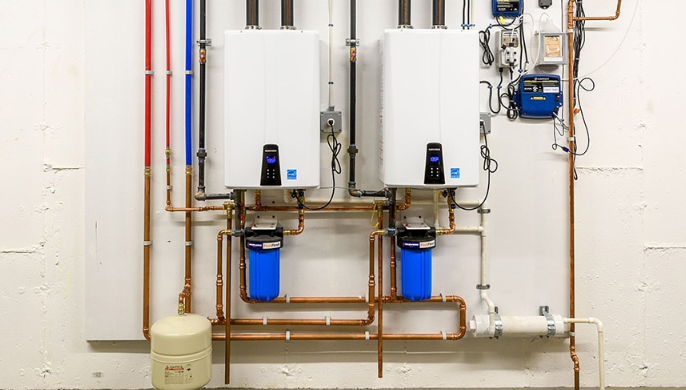
Tankless water heaters heat water as needed using a heat exchanger. They prevent standby heat loss and can last from 15 to more than 20 years. The U.S. Department of Energy notes that for homes using less than 41 gallons a day of hot water, tankless units can be 24%-34% more energy efficient than storage tanks. But the heat exchanger is scaly due to hard water. Descaling itself must be done on a yearly basis or else the efficiency is gone and it may even stop working completely.
Hybrid systems are a cross between a small tank and tankless technology. Perform instantaneous hot water for the first few gallons, and then revert to demand. This minimizes the cold water sandwich effect found in dedicated tankless systems.Top communities of hot water heater/ tankless water heater install/repair In West Phoenix
Step by Step Guide for Installation Process
Knowing how it will go allows you to get your home ready and identify shortcuts.
Step one: assessment and sizing.
The technician will assess your existing unit, calculate the hot water usage demand and inspect whether the gas line or electrical panel has enough volume available for capacity. They test hardness in water in West Phoenix, too! A 50-gallon tank or a unit with a flow rating of 7 to 8 gpm is usually sufficient for four people under normal hot water usage.
Step two: permit application.
City of Phoenix: Perm its are needed for ALL water heater replacement and new installations. Over-the-counter permits are available for gas and electric replacements as long no other plumbing work is part of the. The new unit must be less than 120 gallons; 160 PSI operating pressure and 210°F temperature. The fees for permits begin at $75 for water heaters at a residential address.
Step three: removal and disposal.
The crew gets the old tank completely empty, disconnects gas or electric lines and pulls the unit away. Any disposal of sediment must conform to local environmental standards.
Step four: installation. If the new tank is for a tank unit, the crew will place it on a stand with a drip pan and install water lines connecting to dielectric unions to prevent corrosion. The water service connection then makes its way into the tank’s temperature and pressure relief valve.
Step five: testing and inspection.
Uses a manometer to test for gas leaks, verifies electrical connections and tests of water temperature at various fixtures. The city inspector checks the installation for code compliance.
Step six: cleanup and walkthrough. Crew clears out debris, explains warranty and demonstrates how to flush unit or set timer.Trusted communities of hot water heater/ tankless water heater install/repair In West Phoenix
Hot Water Heater/ Tankless Water Heater Install / Repair West Phoenix Cost
Costs vary by unit type, size and fuel your home is eligible to use and if upgrades are needed.
The average price homeowners pay for a standard tank water heater replacement in Phoenix, AZ is $797 to $1,659, with the majority of people paying about $1,224. There is an economical alternative: Local specialists around the metro area install 40-gallon gas tanks for $1,140 to $1,260 including tax and new supply lines, plus drain pan and haul-away.
Tankless installation runs higher. For the entire United States, tankless appliances are $1,400 to $3,900 installed. The average cost of gas tankless systems in Phoenix is between $3,300 and $6,200 because of the venting requirements and possible upgrading of your gas line. Electric tankless slightly less — $1,100 to $2,700 but may need panel upgrade $1,000 to $3,000.
For example, an electric tank in Laveen installed for one West Phoenix homeowner we collaborated with began leaking at the base and was 9 years old. They selected a replacement 50-gallon gas tank for $1,450 with permit and installation.
Choosing a Water Heater Technician in West Phoenix
Installing gas or electrical water heaters is not safe work for every handyman to do. Here is what to look for.
Verify Arizona licensing. An Arizona Registrar of Contractors (ROC) license is required for water heater installers. They must have a C-37 plumbing or C-37R residential specialty license for gas work. Request the ROC number and find it online. But such unlicensed work renders manufacturer warranties invalid, and adds to health hazards.
Ask about hard water experiences. That’s where a West Phoenix hot water heater/ tankless water heater install/repair tech — like Home Tech Appliance Repair — comes in; they will test your water hardness, and help you if scale-prevention measures are necessary, as well what type of anode rods work best against our mineral content. Home repair professionals often bypass these steps, resulting in shorter life spans.
Request an itemized quote.
Valid estimates detail the breakdown of unit cost, labor, permit costs, disposal and upgrades — including parts such as gas line work or changes to your electrical panel. Do not be fooled with single lumpsum quotes that hide surprises.
Check warranty terms.
Tank units should have a minimum of a 6 year manufacturer warranty on the tank and components. Most tankless units come with 10 to 15 yr. on the heat exchanger skip this part of my response, but then make sure you actually look into other warranties as well. A labor warranty usually lasts a minimal of 1 year.
A contractor in our area —such as Home Tech Appliance Repair, which focuses solely on a limited range of water heater work—will have dealt with the local permit process, know which units hold up best against our high mineral content hard water and be covered by trade-specific insurance that is too often omitted at general repair shops.
Frequently Asked Questions
Water Heater Replacement Cost in West Phoenix?
Installed costs for replacing a standard tank runs $1,100 to $1,600. Local specialists are charging $1,140 to $1,260 for 40 to 50-gallon gas or electric tanks that won’t break the bank.
Phoenix, Arizona Water Heater Replacement Permit Required?
Yes. Permits Required: The City of PhoenixRequires permits for all water heater installations and replacements Bundesregierung If you are replacing your faucet with another 1, then an over-the-counter permit is acceptable (which means that no plumbing work apart from the tool itself).
Water Heaters Life Expectancy in Arizona Hard Water — How Long Do They Last?
In Arizona, tank water heaters are good for only 6 to 10 years compared to a national average of 10 to 12 years. Calcium and magnesium levels reach 158 to 344 mg/L in hard water, it can hasten the process of sediment formation and corrosion.
West Phoenix home tank vs tankless; What’s the difference?
Tankless Saves 24% to 34% on energy costs, Lasts twice as long, but Higher upfront cost and annual maintenance. Tanks are cheaper at first, but need to be replaced sooner.
How do the hard water conditions affect my water heater?
Minerals from hard water settle at the bottom of tanks, insulating heating elements and causing a 15% to 20% efficiency loss. In tankless units, it coats the heat exchanger and eventually restricts flow.
Water,Gas & Electric Water Heater Installation FAQs: Can I install a water heater Contingently in Phoenix?
It is legal to do your own installation, but it is dangerous. Vent spacersGas connections are pressure tested and phoneing. Obtaining a permit and inspection is essential for all electrical work. And even the smallest of errors can be start a fire, carbon monoxide poisoning, or flooding.
Flush My Water Heater How Often in Arizona?
Due to our extremely hard water, twice a year. Flushing washes sediment away before it turns into scale. All tankless models must be descaled annually with vinegar or a commercial water-scaling. Certain manufacturers demand maintenance records to uphold warranties.
Challenges: seeing some hardware water warmer estimate needs to family of four in Phoenix
Well, for most four-person households, a 50 gallon tank will be just fine. For a tankless, consider a model rated at 7 to 8 gallons per minute in order to run both a shower and the dishwasher.
Heat Pump Water Heaters In Phoenix: Are they worth it?
Yes. Since they draw heat out of the warm air in a garage, they can be very efficient here too. The Department of Energy says they are approximately $170 each year versus standard electric tanks.
How to tell when my water heater is due for replacement?
Getting rusty hot water, rumbling or popping sounds, leaking water under the tank, and inconsistent temperature means it’s time to replace. For example, in Arizona, you should carefully watch any tank older than 6 years.
What should i do to ensure that my new water heater does not get damaged due to hard water?
Install water conditioner or softener at the main line. Every six months, flush the tank. Change out the anode rod every two to three years (sooner in extremely hard water).
A tankless water heater during a Phoenix summer power outage?
The gas units, specifically tankless ones with standing pilot lights that work even during power outages. Even electronic ignition models require power to function.
Conclusion
West Phoenix hot water heater/tankless water heater install/repair starts with an honest assessment of the quality of your water and your household needs. Check your unit’s age. And if it is older than 6 years get an inspection. Factor in the unit, installation, permit and any upgrades needed into your budget.Affordable communities of hot water heater/ tankless water heater install/repair In West Phoenix
Select a system aligned with your timeline Tanks only hold up on short budgets and shorter terms. Tankless or heat pump units offer lower bills and longer lifespans for those that stay long enough.